
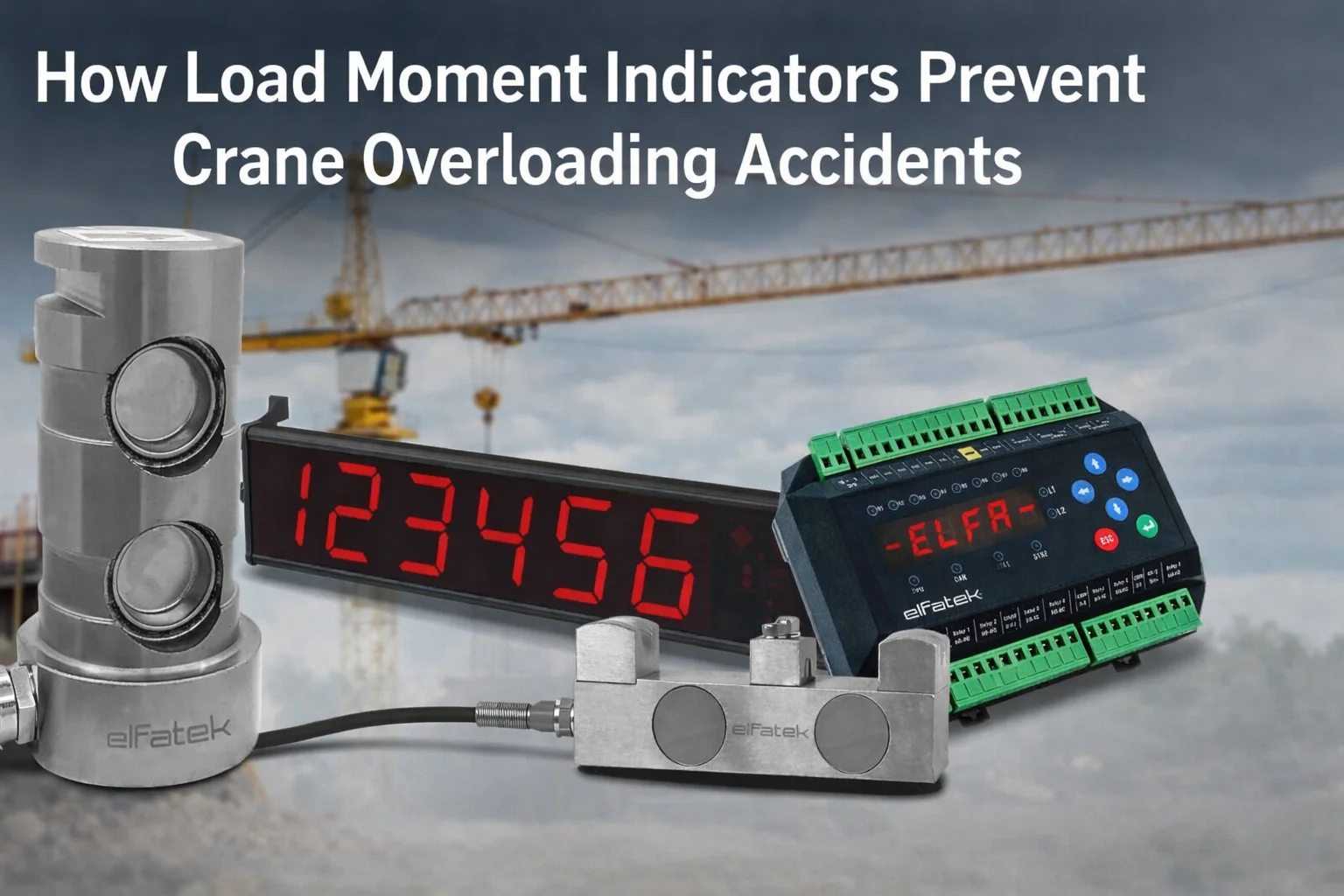
Overview – Load moment indicator for crane safety
A load moment indicator for crane safety is a critical electronic device that constantly checks whether a crane is working within its safe lifting capacity, helping operators avoid dangerous overloading situations that can lead to tipping, structural failure, or dropped loads. By turning complex load charts into simple real‑time warnings and automatic cut‑offs, LMIs act like an on‑board safety officer for every lift.
What Is a Load Moment Indicator for Crane Safety?
A load moment indicator for crane safety is a microprocessor‑based system that measures the load being lifted, the boom angle, boom length, and working radius, then compares these values against the crane’s rated capacity chart.
The system continuously calculates the load moment, which is the product of load weight and its distance from the crane’s center of rotation, to determine how close the crane is to its stability limit. When the load moment approaches preset thresholds, the LMI alerts the operator and can automatically limit or stop movements that would make the lift unsafe.
Why Load Moment Matters in Crane Safety
In crane operations, load moment is more important than just load weight because even a moderate load can become dangerous when lifted at a long radius or steep boom angle. The load moment indicator for crane safety tracks how weight, radius, and configuration combine to affect tipping risk, so operators do not rely on guesswork or manual calculations during critical lifts.
By continuously evaluating moment rather than only gross weight, the system prevents common errors such as lifting a heavy load too far from the crane or swinging it into a weaker working zone.
Key Components of an LMI System
A modern load moment indicator for crane safety consists of several integrated components working together in real time. Typical LMIs include multiple load and angle sensors, a central processing unit, an operator display, and visual plus audible alarm devices linked to the crane’s control circuit.
Some advanced systems also monitor outrigger position, wind speed, chassis inclination, and counterweight configuration to refine their safety calculations under changing site conditions.
How the Load Moment Indicator Works Step by Step
During lifting operations, the load moment indicator for crane safety continuously collects data from sensors that measure hook load, boom length, boom angle, slewing position, and working radius. The central processor converts this data into a current load moment and compares it with the maximum allowable moment for the crane’s present configuration as defined in its rated load chart.
As the percentage of rated capacity increases toward limit values, the system first issues warnings and, at higher thresholds, automatically blocks unsafe motions such as further hoisting, booming out, or trolley travel.
Typical Safety Functions and Features
A load moment indicator for crane safety provides layered protection through early warning and automatic intervention features. Common functions include real‑time load display, percentage‑of‑capacity indication, progressive visual and audible alarms, and automatic cut‑off of hoisting or radius‑increasing movements when overload is detected.
Many LMIs also record overload events for later analysis, support multiple operating modes or duty charts, and can integrate with remote monitoring or fleet management systems for centralized safety oversight.
Preventing Overloading and Structural Failure
Overloading is one of the leading causes of crane accidents, resulting in boom buckling, wire rope damage, and catastrophic tipping incidents. A properly configured load moment indicator for crane safety helps prevent these failures by stopping the crane from exceeding its rated structural limits and by warning operators well before critical thresholds are reached.
By maintaining operations within safe working load and moment limits, LMIs reduce stress on key components, extend equipment life, and minimize unplanned downtime due to major repairs.
Improving Operator Awareness and Decision‑Making
Even skilled operators can misread load charts or misjudge radius changes under time pressure, especially when visibility is poor or communication is unclear. A load moment indicator for crane safety turns complex capacity information into intuitive graphics and alarms, allowing operators to see at a glance how close a lift is to the allowable limit.
This improved situational awareness encourages conservative decision‑making, reduces human error, and supports safer coordination between the operator, rigger, and signal person on busy worksites.
Regulatory Compliance and Industry Standards
Many international and national safety standards treat the load moment indicator for crane safety as mandatory or strongly recommended equipment on mobile, tower, and shipboard cranes. Regulations such as China’s GB 6067.1‑2010 and GB/T 12602, as well as OSHA and ISO‑based crane safety codes, require overload protection or load monitoring systems for high‑risk lifting operations.
Installing compliant LMIs not only meets legal obligations but also demonstrates a proactive safety culture that can reduce insurance costs and improve prequalification scores with major contractors.
Installation Quality, Calibration, and Maintenance
The effectiveness of any load moment indicator for crane safety depends heavily on correct installation, accurate calibration, and regular maintenance. During installation, core parameters such as rated moment, maximum radius, and boom length must be matched precisely to the crane’s technical documentation, and safety circuits must cut power rapidly if the monitored value exceeds preset overload thresholds.
Periodic calibration checks, sensor inspections, and functional tests ensure the LMI keeps delivering reliable readings and responses throughout the crane’s service life.
Applications Across Different Crane Types
Today, the load moment indicator for crane safety is widely used on mobile cranes, tower cranes, crawler cranes, and marine or offshore cranes operating in harsh environments. In each application, the system is tailored to the specific crane configuration, including fixed or luffing jibs, articulated booms, and variable outrigger setups, so that the safety logic reflects real‑world operating limits.
For articulated or knuckle‑boom cranes, modern LMIs can even define custom safety zones around power lines, buildings, or restricted areas and automatically restrict movement into those zones.
Benefits for Plant Managers, Safety Officers, and Crane Owners
For decision‑makers responsible for lifting operations, investing in a reliable load moment indicator for crane safety delivers measurable returns in both risk reduction and productivity. LMIs help avoid costly accidents, protect personnel and expensive equipment, and minimize project delays caused by incident investigations or regulatory penalties.
At the same time, the ability to work confidently near the top of the rated capacity—without crossing safety limits—can improve lifting efficiency and throughput on construction sites, manufacturing plants, ports, and shipyards.
Choosing the Right Load Monitoring System
When selecting a load moment indicator for crane safety, key evaluation points include sensor accuracy, alarm thresholds, compatibility with the crane model, environmental protection rating, and ease of use for operators. Buyers should confirm that the system complies with relevant standards for their region, offers clear on‑screen information, and supports diagnostics or data logging features useful for audits and preventive maintenance planning.
Partnering with experienced manufacturers or system integrators ensures correct configuration, seamless integration with crane controls, and reliable after‑sales support over the equipment’s lifetime.
FAQ: Load Moment Indicator for Crane Safety
What is a load moment indicator for crane safety?
A load moment indicator (LMI) for crane safety is an electronic system that monitors load weight, radius, boom angle, and other factors in real time to prevent overloading. It compares current conditions against the crane’s capacity chart and triggers alarms or cut-offs when limits are approached.
How does a load moment indicator for crane safety work?
The LMI collects data from sensors on load, angle, and position, calculates the actual load moment, and displays it as a percentage of safe capacity. It issues progressive warnings and can automatically stop unsafe movements like hoisting or extending the boom.
Why is a load moment indicator essential for crane safety?
Without an LMI, operators risk overloading due to misjudged radius or configuration changes, leading to tipping or structural failure. It provides precise, real-time protection beyond simple weight checks, reducing accidents and ensuring regulatory compliance.
What maintenance is required for a load moment indicator?
Regular calibration, sensor checks, and functional tests are vital for a load moment indicator for crane safety. Inspect wiring and displays daily, calibrate per manufacturer intervals, and verify cut-off functions during pre-use inspections to maintain accuracy.
Are load moment indicators mandatory for all cranes?
Many standards like OSHA, GB/T 12602, and ISO require a load moment indicator for crane safety on mobile, tower, and heavy-lift cranes. Requirements vary by region and crane type, but they are standard for operations over certain capacities to meet safety codes.