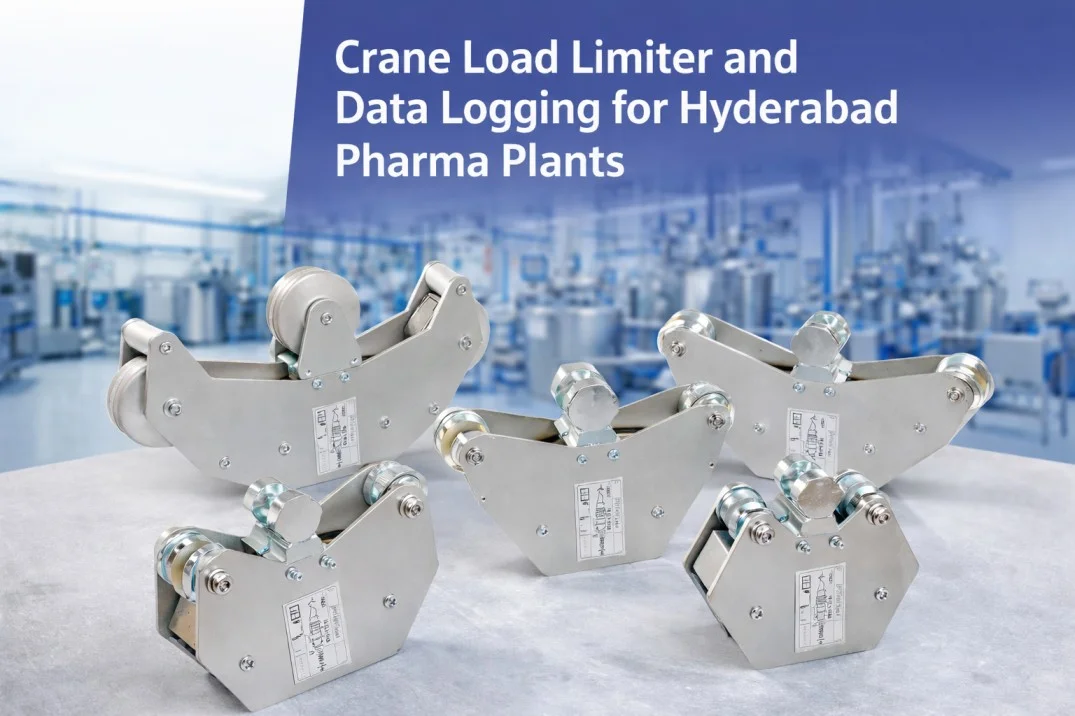
The pharmaceutical industry in Hyderabad has grown into one of India’s most advanced and safety-conscious manufacturing hubs. Among the critical equipment used across these facilities, cranes play a vital role in material lifting, ingredient handling, and equipment maintenance. To ensure precision and safety, the integration of crane load limiter and data logging for Hyderabad pharma plants has become essential.
Introduction to Crane Load Limiter and Data Logging for Hyderabad Pharma Plants
Cranes used in pharmaceutical environments must maintain consistent lifting accuracy, operational safety, and process documentation. A crane load limiter ensures the crane does not exceed its designed load capacity, thereby preventing structural damage or operational hazards. Combined with data logging systems, pharma facilities gain real-time monitoring, operational analytics, and maintenance insights — vital for audit trails and compliance with safety norms.
These intelligent systems are not only improving safety but also setting new benchmarks for operational efficiency and data traceability in Hyderabad’s pharmaceutical manufacturing sector.
Importance of Crane Safety
In pharma plants, maintaining safety is more than meeting compliance — it’s about protecting both equipment and people. Overloaded cranes can lead to severe equipment damage or workplace accidents, resulting in production losses and reputational risks.
By using a crane load limiter and data logging for Hyderabad pharma plants, companies ensure that every lifting operation stays within safe parameters. The limiter continuously monitors load weight, while the data logger records event histories for preventive maintenance audits.
This proactive approach to safety helps factories in Hyderabad comply with OSHA, ISO, and local Directorate of Factories & Boilers safety guidelines. The goal is simple: zero breakdowns, zero accidents, and fully auditable lifting records.
Key Technologies Involved
Modern crane load limiter and data logging systems integrate multiple technologies to deliver smart automation and precision control. These include:
-
Microprocessor-based load monitoring units for real-time overload protection.
-
Load cells and sensors that measure the actual lifting force on the crane hook.
-
Digital data loggers with USB or cloud connectivity for historical tracking.
-
Display and alert interfaces that show live load values and issue alerts when limits exceed safe thresholds.
-
IoT-enabled gateways that transmit crane performance data to centralized plant management systems for analysis.
In Hyderabad’s pharma settings, these technologies are often integrated into cleanroom cranes and overhead gantry systems to ensure both operational efficiency and hygiene safety.
Industry-Specific Applications
Pharmaceutical plants in Hyderabad handle various sensitive materials — from Active Pharmaceutical Ingredients (APIs) to precision stainless-steel reactors. Each process requires careful handling to prevent contamination or product loss.
Common use cases for crane load limiter and data logging in Hyderabad pharma plants include:
-
Reactor vessel handling in formulation and synthesis areas.
-
Load transfer in sterile zones, where controlled movement is critical.
-
Maintenance lifting operations for HVAC and filtration systems.
-
Packaging and pallet transfers in warehousing and distribution units.
-
Material movement in hazardous areas, ensuring compliance with ATEX or explosion-proof standards.
These applications demonstrate how data-backed lifting systems ensure accuracy, enhance equipment life, and support process validation — all integral factors in pharmaceutical manufacturing efficiency.
Installation & Compliance Guidelines
Implementing a crane load limiter and data logging system requires collaboration between plant engineers, crane manufacturers, and automation experts like Aggra Cranes. The installation process generally includes:
-
System design and capacity analysis based on crane type and plant requirements.
-
Sensor calibration and integration into the existing control panel.
-
Testing and commissioning in compliance with IS 3177 and IS 807 standards for cranes.
-
Validation of data logging systems to align with GMP (Good Manufacturing Practice) and FDA 21 CFR Part 11 requirements.
-
Operator training and documentation, ensuring staff can interpret data and perform routine monitoring.
When properly installed, these systems deliver long-term performance, ensuring regulatory compliance and operational transparency for auditors and safety inspectors.
Performance & Safety Benefits
The dual setup of crane load limiter and data logging for Hyderabad pharma plants delivers several measurable advantages:
-
Enhanced operational safety by preventing overloading incidents.
-
Reduced equipment wear and downtime, minimizing costly repairs.
-
Accurate operational data for performance benchmarking and audit compliance.
-
Easy maintenance planning through trend monitoring of lifting cycles.
-
Better quality assurance with documented load handling records.
Moreover, data-driven insights help plant managers identify inefficiencies, schedule maintenance, and comply with strict pharmaceutical industry standards, ultimately boosting productivity and reliability.
Why Choose Aggra Cranes
Aggra Cranes & Engineering LLP stands as one of India’s trusted partners for industrial crane automation and safety modernization. With extensive experience serving B2B industries — including pharmaceuticals, material handling, and engineering — Aggra Cranes provides:
-
Custom-designed crane load limiter and data logging systems tailored for cleanroom and GMP environments.
-
Precise calibration and installation handled by certified engineers.
-
Advanced lift monitoring interfaces compatible with Hetronic wireless control systems.
-
After-sales support and periodic maintenance, ensuring uninterrupted operations.
-
Integration capability with both old crane systems and new-generation industrial automation setups.
For Hyderabad pharma manufacturers aiming to achieve higher standards of safety, traceability, and process control, Aggra Cranes offers an end-to-end engineered solution that ensures compliance and continuity.
Conclusion
The growing adoption of crane load limiter and data logging for Hyderabad pharma plants represents a shift toward smarter, safer, and more compliant manufacturing environments. With digital data as the backbone of modern safety systems, pharma companies can now achieve greater operational transparency and regulatory confidence.
Aggra Cranes continues to pioneer innovative lifting safety solutions that not only protect infrastructure but also empower decision-makers with actionable insights. For pharma plants aiming to upgrade their crane systems, now is the perfect time to embrace these intelligent technologies for long-term reliability and compliance excellence.
Frequently Asked Questions (FAQ)
1. What is a crane load limiter, and why is it important for pharma plants?
A crane load limiter is a safety device that prevents cranes from lifting beyond their rated capacity. In pharma plants, it ensures safe material handling, protects equipment, and aligns with GMP safety protocols.
2. How does data logging improve crane operations?
Data logging records every lifting instance, load value, and operational event. This information helps with maintenance scheduling, performance analysis, and audit documentation — crucial for compliance in pharmaceutical environments.
3. Can existing cranes be retrofitted with modern load limiters?
Yes. Aggra Cranes provides retrofit solutions to upgrade existing cranes with smart load limiter and data logging systems, improving safety without requiring a complete crane replacement.
4. Are these systems compliant with Indian and international safety standards?
Absolutely. All load limiter and data logging solutions from Aggra Cranes comply with IS, OSHA, and GMP standards, ensuring adherence to both national and global safety norms.
5. How can I get a quote for crane load limiter installation in Hyderabad?
You can contact Aggra Cranes through aggracranes.com for a site assessment and customized quote based on crane capacity, industry application, and safety compliance requirements.