Introduction – Crane Safety Devices in India
Crane safety devices are essential for maintaining operational safety standards and reducing the risk of accidents at industrial, construction, and infrastructure sites across India. The Indian market has seen increased demand for advanced crane safety solutions, driven by regulatory updates and project complexity. This article offers a detailed overview of crane safety devices in India, compliance standards, and best practices in India.
Regulatory Framework for Crane Safety Devices
In India, crane safety is governed by robust regulations from the Bureau of Indian Standards (BIS) and the Directorate General, Factory Advice Service and Labour Institutes (DGFASLI). Key standards shaping safe crane operations include IS 4573 (construction and maintenance), IS 3177 (overhead crane design), and adherence to the Factories Act, 1948. Compliance is not just mandatory—it ensures safer worksites and protects workers’ welfare.
Essential Crane Safety Devices Used in India
Modern crane safety relies on a variety of sophisticated devices, each designed to mitigate specific operational hazards.
-
Load Limiters: Prevent cranes from lifting beyond rated capacity, averting mechanical failure and tipping risk.
-
Safe Load Indicators (SLI): Monitor real-time loads to ensure the crane operates within designed specifications.
-
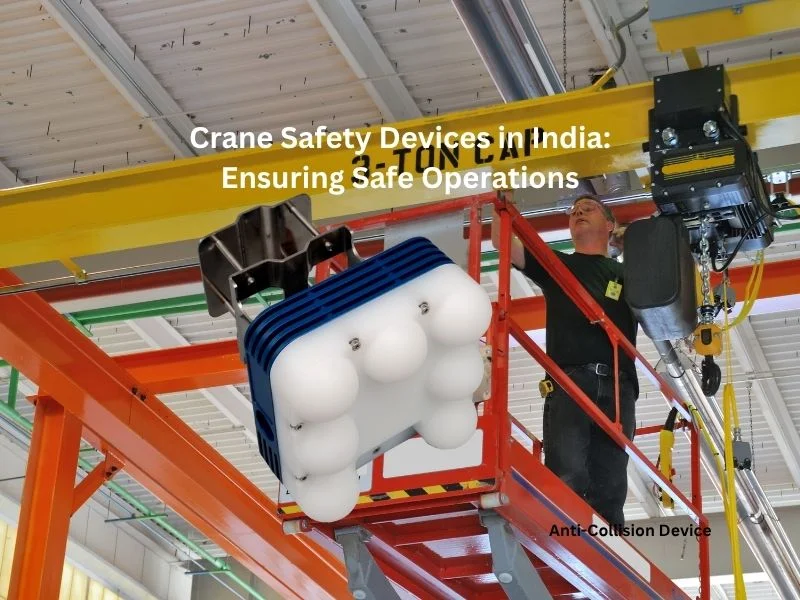
Anti-Collision Systems: Use sensors and proximity detection to prevent inter-crane and crane-to-structure collisions.
-
Slew and Travel Limiters: Restrict crane movement within safe zones, especially crucial at congested sites.
-
Emergency Stop Switches: Allow instant shutdown during hazardous situations, minimizing accident risks.
-
Wind Speed Sensors: Detect dangerous wind conditions and halt operations automatically, protecting tower cranes and high-altitude lifts.
-
Proximity Sensors: Identify obstacles in the crane’s operational radius to prevent overreach and impact.
-
Rope Fall-Out Devices: Prevent hoist rope from falling out, ensuring safe lifting actions.
-
Jib Luffing Stoppers: Avoid jib breakage or toppling by enforcing operating angle limits.
These devices are engineered to match the operational environment—whether for mobile, tower, overhead, or crawler cranes.
Types of Safety Devices by Crane Model
Each crane type in India requires specialized safety devices to minimize unique risks:
| Crane Type | Key Safety Devices |
|---|---|
| Mobile Cranes | Load limiters, outrigger sensors, anti-tipping systems |
| Tower Cranes | Anti-collision, wind speed sensors, slew limit switches |
| Overhead Cranes | Safe load indicators, emergency stops, limit switches |
| Crawler Cranes | Rope fall-out devices, SLI, travel limiters |
Safety Device Compliance and Maintenance
Ensuring that all safety devices operate correctly requires strict adherence to inspection routines and maintenance protocols, as outlined by IS codes and industry best practices. Daily checks, monthly certified inspections, and proactive maintenance lead to longer device life and reduced downtime. All operators should be trained in both crane operation and the correct use of safety devices.
Common Challenges in Indian Crane Operations
India’s rapidly growing infrastructure sector faces several crane safety challenges. High-rise construction, metro rail projects, and refinery expansions put extra demand on reliable safety solutions. Lack of certified operators, improper maintenance, and inadequate device monitoring have contributed to nearly 40% of site accidents involving cranes, according to recent government data.
Technology Innovations in Crane Safety Devices
New advances include wireless remote controls, encrypted signal transmission, and live diagnostic displays. Devices using FHSS (Frequency Hopping Spread Spectrum) prevent interference, boosting reliability in harsh Indian environments. Customizable control schemes and real-time status feedback help operators make safer decisions on busy job sites.
Operator Training and Safety Culture
Effective safety is driven by knowledgeable operators and a safety-first management culture. Certified training programs reduce mishandling risk and ensure all safety devices are actively used and maintained. Site engineers should conduct pre-operation inspections, monitor fluid levels, test safety mechanisms, and confirm device functionality before each shift.
The Future of Crane Safety Devices in India
The future of crane safety combines advanced devices with wireless intelligence and real-time risk management. Industry leaders anticipate greater integration of AI-powered monitoring, IoT-based device status tracking, and remote diagnostics for smarter, safer, and more efficient crane operations.
Frequently Asked Questions
What are the mandatory crane safety devices in India?
Mandatory devices include load limiters, safe load indicators, anti-collision systems, emergency stops, and slew limiters under Indian standards such as IS 3177 and IS 4573.
How often should crane safety devices be inspected?
Safety devices must be checked daily, with monthly certified inspections required for compliance with IS codes and workplace safety guidelines.
Can anti-collision systems be retrofitted on older cranes?
Yes, many Indian suppliers offer custom anti-collision solutions and safe load indicators that can be retrofitted to older crane models for enhanced safety.
Why is operator training important for crane safety?
Certified operator training reduces mishandling risks by up to 80%, ensures proper use of safety devices, and lowers accident rates significantly.
Are there new laws affecting crane safety devices in 2025-2026?
Yes, ongoing regulatory updates—including international standards—require cranes to meet stricter device, inspection, and training norms starting in 2026 for certain sectors.
Conclusion
Crane safety devices in India are vital for reliable and accident-free lifting operations, focusing on compliance, operator training, and technological innovation. Regular inspection and the adoption of advanced safety solutions help project owners and contractors meet legal requirements and achieve higher productivity with minimal risk.