Introduction to overhead crane safety solutions for warehouses in Bengaluru
Modern warehouses in Bengaluru handle high volumes of pallets, coils, and heavy machinery every day, making safe material handling absolutely critical for productivity and worker well‑being. Overhead cranes are preferred because they free up floor space, reduce forklift traffic, and allow precise, repeatable lifting operations in congested aisles. However, these advantages only translate into real value when robust overhead crane safety solutions are implemented, monitored, and regularly upgraded.
Bengaluru’s fast‑growing industrial zones such as Peenya, Bommasandra, and Bidadi demand crane systems that meet Indian safety standards while coping with tight layouts and round‑the‑clock operations. This is where specialized crane safety and control partners like Aggra Cranes help warehouses convert basic lifting equipment into intelligent, compliant, and accident‑free systems.
Importance of crane safety
Crane‑related incidents in warehouses typically occur due to overloading, poor visibility, operator error, or lack of preventive maintenance, and even a minor lapse can lead to costly downtime or serious injury. Indian regulations like the Factories Act and BIS standards make it mandatory for employers to provide safe lifting equipment, competent operators, and documented inspection routines for all cranes.
For Bengaluru warehouses serving automotive, logistics, and engineering clients, one crane shutdown can disrupt entire supply chains and breach strict delivery timelines. Investing in structured crane safety solutions—devices, training, and monitoring—therefore protects people, inventory, and infrastructure while also lowering insurance and compliance risks. With the right safety systems, warehouses can increase lifting speeds and load utilization confidently instead of operating with conservative margins due to fear of accidents.
Key technologies involved
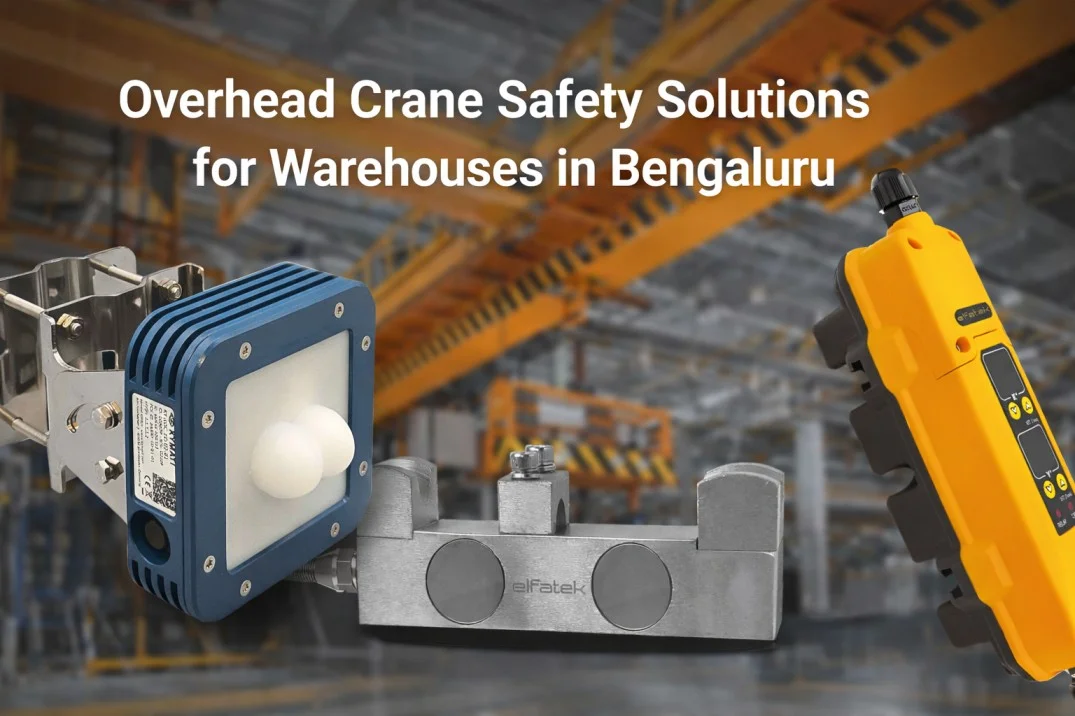
Today’s overhead crane safety ecosystem goes far beyond basic limit switches and emergency stops, bringing together electronics, sensors, and smart control logic. Anti‑collision systems use lasers or ultrasonic sensors to automatically maintain safe distances between two cranes on the same bay or between a crane and physical end stops, which is especially useful in multi‑aisle Bengaluru warehouses.
Load cells and overload limiters constantly measure the actual load on hooks, blocks, or trolleys and cut off hoisting when the safe rated capacity is exceeded, preventing structural damage and rope failures. Safety warning lights mounted on the crane project bright lines or spots on the floor to visually mark danger zones, helping pedestrians and forklift drivers stay clear of moving loads in noisy environments. Advanced radio remote controls, IoT‑enabled controllers, and cloud dashboards from specialists like Aggra Cranes allow supervisors to track usage hours, trips, faults, and maintenance events in real time.
Industry‑specific applications
Every warehouse segment around Bengaluru uses overhead cranes differently, so safety solutions must be tailored to the actual application rather than copied from generic checklists. Automotive and engineering stores handling dies, fixtures, and machine parts need precise positioning, synchronized hoisting, and anti‑sway controls to avoid damaging high‑value components. Steel, fabrication, and coil‑storage warehouses rely on long‑travel gantry and EOT cranes where anti‑collision devices, overload limiters, and robust braking systems become essential for safe long‑span operation.
Third‑party logistics (3PL) and e‑commerce hubs often combine overhead cranes with conveyors and ASRS systems, demanding seamless interlocking so that equipment cannot enter an occupied zone. Bengaluru’s construction‑equipment and infrastructure suppliers benefit from IoT monitoring, which helps them standardize safety practices across multiple rented or contract‑operated cranes.
Installation & compliance guidelines
Safe crane performance starts at the design and installation stage, when load charts, runway beams, and electrical panels are engineered according to Indian standards such as IS 3177 and IS 4573. Warehouses in Bengaluru must ensure that civil structures, columns, and bracket supports are verified by structural engineers for the additional dynamic loads introduced by overhead cranes.
During installation, certified technicians should align rails, set travel limits, calibrate load cells, and test braking distances using documented commissioning procedures. Before handover, each crane must undergo load testing and inspection as per BIS and Factory Act requirements, with test certificates and manuals handed over to the safety department. Ongoing compliance demands planned preventive maintenance, daily operator checks, and periodic third‑party inspections, especially for high‑duty cranes working multiple shifts in Bengaluru’s industrial clusters.
Performance & safety benefits
Implementing comprehensive overhead crane safety solutions can significantly increase warehouse throughput while reducing unplanned downtime and maintenance surprises. With overload protection and anti‑collision systems in place, operators can use the full rated capacity of the crane confidently instead of under‑utilising it due to fear of shock loads or collisions. Warning lights, audible alarms, and clear operating zones reduce pedestrian near‑misses, thereby improving morale and trust among warehouse teams.
IoT‑enabled control panels and data logging help managers analyse trends such as peak usage periods, frequent fault codes, or repeated emergency stops, allowing targeted corrective actions. Over time, this data‑driven approach lowers repair costs, extends crane life, and strengthens compliance documentation for audits by customers, insurers, and statutory authorities in Karnataka.
Why choose Aggra Cranes
Aggra Cranes & Engineering LLP is a dedicated crane safety and control solutions provider, serving industries across India with a strong presence in Bengaluru’s manufacturing and warehouse belt. The company supplies and supports a complete portfolio of safety‑focused products, including anti‑collision systems, load cells, overload limiters, IoT crane controllers, radio remotes, and advanced control panels. Its engineering team works closely with warehouse owners, OEM crane manufacturers, and maintenance contractors to design customized solutions that fit existing structures, duty cycles, and budgets.
For Bengaluru warehouses, Aggra Cranes offers site surveys, panel retrofits, and integration of smart sensors, ensuring that even older EOT cranes can be upgraded to current safety expectations without full replacement. Participation in major trade shows such as Excon in Bengaluru demonstrates Aggra Cranes’ commitment to staying aligned with the latest global innovations in crane safety and automation.
Conclusion
Overhead crane safety solutions for warehouses in Bengaluru are no longer optional add‑ons; they are an essential investment in people, productivity, and long‑term asset protection. By combining compliant design, smart devices, visual and audible warning systems, and IoT‑enabled monitoring, warehouses can convert cranes into safe, efficient, and audit‑ready lifting systems.
Partnering with a specialist like Aggra Cranes ensures that every solution is tailored to your warehouse layout, load profiles, and industry demands, rather than relying on generic hardware alone. If you operate a warehouse in Bengaluru and want to enhance overhead crane safety, now is the right time to evaluate your existing systems, close the gaps, and implement future‑ready controls that keep both your workforce and your business secure.
Frequently Asked Questions
1. What are the most important overhead crane safety solutions for warehouses in Bengaluru?
The most important solutions include overload limiters, anti‑collision devices, warning lights, emergency stop systems, and regular preventive maintenance aligned with Indian standards. Together, these elements reduce human error, protect structures, and keep workers away from hazardous load paths during busy warehouse operations.
2. How do anti‑collision systems improve safety for multiple cranes on the same bay?
Anti‑collision systems use sensors to detect the distance between cranes or end stops and automatically slow or stop travel when the gap falls below a preset limit. This prevents side impacts, buffer damage, and sudden stops that can cause swaying loads or mechanical failures.
3. Why are Indian crane standards like IS 3177 and IS 4573 important for Bengaluru warehouses?
These standards define how overhead cranes must be designed, tested, operated, and maintained to achieve safe performance over their service life. Compliance ensures that your warehouse crane system satisfies legal requirements under the Factories Act and gives auditors confidence in your safety practices.
4. Can existing overhead cranes be upgraded with modern safety devices?
Yes, most existing EOT and gantry cranes can be retrofitted with load cells, overload restrictors, warning lights, anti‑collision systems, and smart control panels. A specialist like Aggra Cranes will assess your current setup and recommend phased upgrades to minimize downtime and cost.
5. Why should warehouses in Bengaluru partner with Aggra Cranes for safety solutions?
Aggra Cranes combines domain expertise, a focused product portfolio, and on‑ground service capability dedicated to crane safety and control across India. For Bengaluru warehouses, this means faster response times, application‑specific engineering, and long‑term support for both new installations and retrofit projects.