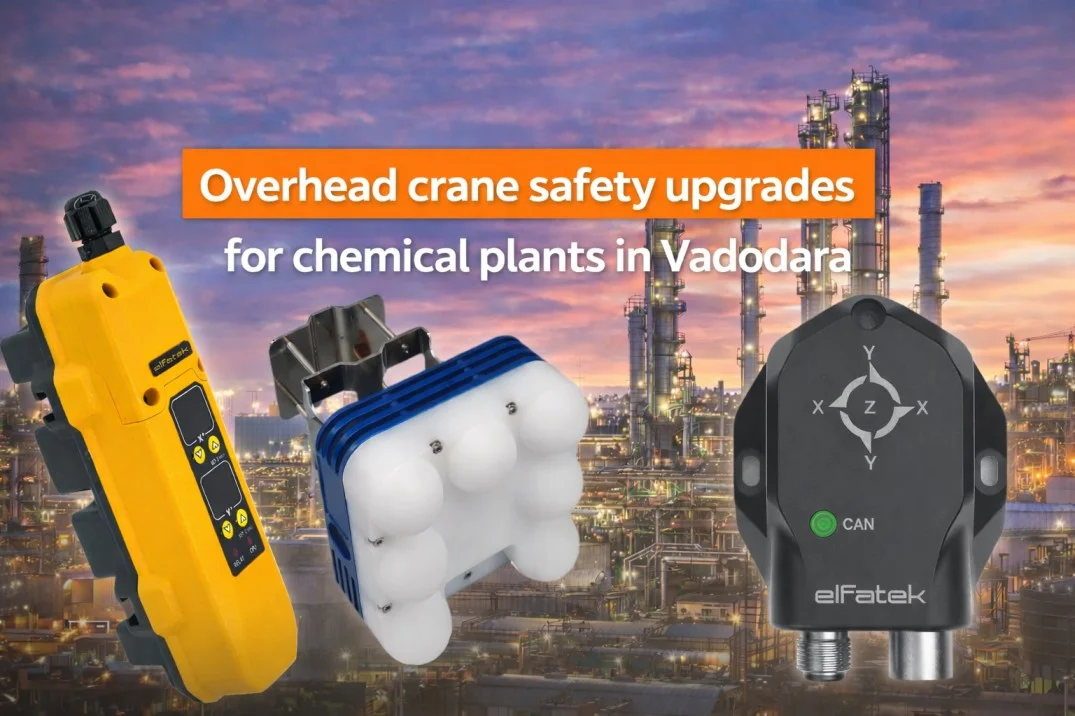
Overhead crane safety upgrades are becoming essential for chemical plants in Vadodara as facilities modernize and increase production volumes. Targeted safety devices and smart controls help plants reduce risk, comply with Indian standards, and extend crane life.
Overhead crane safety upgrades for chemical plants in Vadodara
Chemical plants in Vadodara rely on overhead cranes for handling reactors, storage tanks, and hazardous raw materials during daily operations. Overhead crane safety upgrades for chemical plants in Vadodara focus on preventing accidents in corrosive, high‑temperature, and explosive atmospheres.
These upgrades typically include anti‑collision systems, overload limiters, and IoT monitoring to ensure every lift is executed within defined safe limits. By deploying overhead crane safety upgrades for chemical plants in Vadodara, engineering teams can minimize unplanned downtime and protect high‑value equipment.
Importance of crane safety
Overhead cranes operate above workers, pipelines, and process equipment, so even a minor failure can trigger leaks, fires, or plant shutdowns. In chemical environments, robust crane safety reduces the probability of spills, toxic releases, and chain‑reaction incidents that can escalate rapidly.
Indian standards such as IS 3177, IS 4573, and IS 5312 emphasize systematic inspection, certified safety devices, and trained operators for safe crane use. Upgrading overhead cranes to meet these codes helps Vadodara chemical plants align with audit requirements under the Factories Act and corporate EHS policies.
Key technologies involved
Modern anti‑collision systems use infrared, ultrasonic, or radio sensors to prevent cranes and trolleys from striking each other or building structures. In busy chemical warehouses, these systems keep multiple overhead cranes separated, even when visibility is reduced by fumes or steam.
Overload limiters and safe load indicators continuously measure hook load, compare it with rated capacity, and trigger alarms or automatic cut‑off when limits are exceeded. Data from these devices can be logged through IoT crane controllers for analytics, predictive maintenance, and statutory record‑keeping.
IoT‑enabled crane controllers like intelligent overhead and gantry crane systems collect parameters such as operating hours, number of lifts, faults, and overheating events. Chemical plants in Vadodara can integrate this information with plant DCS or cloud dashboards to schedule maintenance before failures occur.
Other critical upgrades include limit switches, emergency stop stations, siren lights, angle‑sensing side‑pull protection, and flameproof or EX‑rated components for hazardous zones. These technologies ensure overhead crane safety upgrades for chemical plants in Vadodara remain effective even in Zone 1, Zone 2, or dust‑hazardous areas.
Industry‑specific applications
In petrochemical and refinery units around Vadodara, cranes handle catalysts, heat‑exchanger bundles, and heavy process skids during turnarounds. Safety upgrades reduce swing, prevent overloads, and support precise positioning, which protects fragile linings, gaskets, and instrumentation.
Bulk chemical and specialty chemical plants use overhead cranes in tank farms, drum filling lines, and reactor halls where corrosive vapours are common. Here, stainless steel components, special coatings, and sealed electrical enclosures complement electronic safety devices for long‑term reliability.
Water‑treatment and effluent‑treatment plants associated with chemical units also rely on cranes to lift pumps, agitators, and dosing tanks. For these installations, anti‑corrosion protection combined with load monitoring ensures safe maintenance without contaminating treated water lines.
Installation and compliance guidelines
Before installation, plants should conduct a structured safety audit of existing cranes, reviewing structural condition, duty classification, and current safety devices. This assessment helps define the right overhead crane safety upgrades for chemical plants in Vadodara, aligned with actual load spectra and operating cycles.
During installation, qualified technicians must follow OEM instructions, Indian standards like IS 3177 and IS 5312, and plant‑specific work‑permit systems. Post‑installation, every safety device should be tested under supervised load trials, with results documented for inspections and customer audits.
Ongoing compliance relies on preventive maintenance, periodic calibration of load cells and sensors, and refresher training for crane operators and riggers. Chemical plants should integrate these tasks into their EHS schedules so that overhead crane safety upgrades for chemical plants in Vadodara deliver sustained protection.
Performance and safety benefits
Upgraded overhead crane systems significantly reduce collision events, side pulls, and overloading, which extends the life of girders, end carriages, and hoists. Lower mechanical stress means fewer breakdowns, less emergency maintenance, and higher crane availability for production campaigns.
Electronic monitoring and IoT analytics enable condition‑based maintenance, optimizing spare‑parts planning and reducing unscheduled shutdowns. For chemical producers, this directly improves batch consistency, on‑time deliveries, and overall plant efficiency in Vadodara’s competitive industrial landscape.
Most importantly, overhead crane safety upgrades for chemical plants in Vadodara protect workers, contractors, and nearby communities from crane‑related incidents. A strong safety record supports customer confidence, regulatory approvals, and sustainable growth in hazardous‑industry clusters.
Why choose Aggra Cranes
Aggra Cranes & Engineering LLP specializes in crane safety and control solutions, offering anti‑collision systems, overload limiters, IoT crane controllers, and electric chain hoists. The company partners with proven international manufacturers to deliver robust, field‑tested products tailored to Indian industrial conditions.
For overhead crane safety upgrades for chemical plants in Vadodara, Aggra Cranes can supply design support, product selection, installation, and commissioning services. Its team understands the requirements of hazardous environments and helps plants match devices with relevant Indian and international standards.
Local presence and application engineering enable Aggra Cranes to respond quickly to breakdowns, retrofit demands, and audit observations. Customized packages can combine multiple safety devices into integrated solutions that fit existing EOT or gantry cranes without major structural changes.
Conclusion
Overhead crane safety upgrades for chemical plants in Vadodara are no longer optional; they are a strategic investment in reliability and compliance. By integrating advanced sensors, overload protection, and IoT monitoring, plants can operate cranes confidently in corrosive and explosive atmospheres.
Partnering with Aggra Cranes allows engineering and EHS teams to implement overhead crane safety upgrades for chemical plants in Vadodara quickly and effectively. With the right safety architecture, cranes become safer, smarter, and better aligned with the stringent expectations of modern chemical manufacturing.
FAQs
1. Why are overhead crane safety upgrades critical for chemical plants in Vadodara?
Overhead crane safety upgrades for chemical plants in Vadodara reduce the risk of spills, fires, and equipment damage during heavy lifting. They help plants comply with Indian safety standards and internal EHS guidelines while supporting uninterrupted production.
2. Which safety devices are most important for chemical plant cranes?
Key devices include anti‑collision systems, overload limiters, safe load indicators, emergency stop stations, and limit switches. In hazardous zones, explosion‑proof motors, brakes, and control panels are essential parts of overhead crane safety upgrades for chemical plants in Vadodara.
3. How do IoT crane controllers benefit chemical facilities?
IoT controllers track crane usage, faults, overload events, and temperature data in real time. Chemical plants can analyze this information to plan maintenance, improve safety training, and optimize duty cycles for overhead crane safety upgrades for chemical plants in Vadodara.
4. Do safety upgrades require complete crane replacement?
Many overhead crane safety upgrades for chemical plants in Vadodara can be retrofitted on existing EOT or gantry cranes. Structural integrity must be verified, but sensors, controllers, and limiters often integrate with current systems at lower cost than full replacement.
5. Why should Vadodara chemical plants work with Aggra Cranes for upgrades?
Aggra Cranes offers specialized crane safety products, experienced engineers, and on‑site support for hazardous industries. This expertise ensures overhead crane safety upgrades for chemical plants in Vadodara are correctly specified, installed, and maintained throughout the crane’s lifecycle.