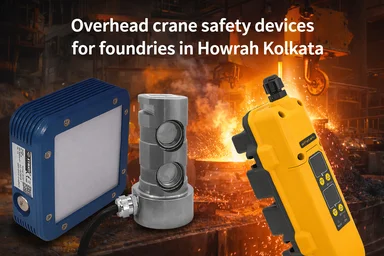
Overhead crane safety devices for foundries in Howrah and Kolkata are essential to keep operators, equipment, and molten metal handling operations safe while meeting Indian safety standards and customer audit expectations. This blog explains why dedicated safety solutions from Aggra Cranes are critical for steel and casting units in this high‑risk region.
Overhead crane safety devices for foundries in Howrah Kolkata
Foundries in Howrah and Kolkata rely on heavy‑duty EOT and overhead cranes to move molten metal, ladles, molds, and castings across tight bay layouts and congested shop floors. Any failure of crane safety devices in such environments can result in metal spills, fires, structural damage, and long production shutdowns, making engineered protection a non‑negotiable investment.
Aggra Cranes delivers specialized crane safety solutions tailored to Indian foundries, combining electronic overload protection, anti‑collision systems, IoT monitoring, and operator-assist features designed for dusty, high‑temperature conditions. By integrating these systems on new and existing cranes in Howrah industrial areas, plant owners can modernize legacy assets without replacing complete crane structures.
Importance of crane safety
In a foundry, a single dropped ladle or over‑travel can expose workers to molten metal, toxic fumes, and structural collapse, which is why Indian regulations such as the Factories Act and BIS standards mandate strict crane safety practices. Beyond legal obligations, safety devices reduce unplanned downtime, protect high‑value furnaces and molds, and help plants clear OEM and customer safety audits with confidence.
Overhead crane safety also improves productivity because operators can work at rated capacity with real‑time feedback instead of guessing safe limits and slowing every lift. For foundries battling tight delivery schedules and frequent heat cycles, this balance of safety and throughput is a major competitive advantage.
Key technologies involved
Modern overhead crane safety solutions for foundries use multiple layers of technology to eliminate common accident causes such as overloading, collisions, and unsafe side pulls. Core devices include:
-
Load cells, load limiters, and safe load indicators that continuously monitor lifted weight and cut off hoisting when operators approach or exceed safe capacity.
-
Limit switches for hoist, trolley, and bridge travel that prevent hooks from over‑hoisting, cranes from running off the gantry, and trolleys from crashing into end stops or bay structures.
-
Anti‑collision systems using sensors or laser technology to maintain safe distances between neighboring cranes or fixed obstacles, especially in multi‑bay foundry sheds.
-
Side‑pull and rope‑angle monitoring devices that detect unsafe horizontal loading on ladles or buckets and automatically restrict motion to protect the hoist rope and structure.
-
Operator assistance tools such as radio remote controls, CCTV, audio‑visual alarms, and IoT‑based monitoring platforms like Intellikran that provide condition data, alarms, and predictive maintenance insights.
Together these technologies transform a basic EOT crane into an intelligent material‑handling system capable of self‑protection and incident prevention in demanding foundry environments.
Industry‑specific applications
Howrah and Kolkata host numerous steel, casting, and engineering units where cranes work above furnaces, pouring lines, and sand preparation areas, all of which require tailored safety logic. In melt shops, overload limiters and high‑temperature‑rated sensors are critical when lifting ladles, scrap baskets, and charge buckets that operate close to rated capacity during every heat.
In mold‑handling and fettling zones, anti‑collision and travel‑limit systems help prevent cranes from striking conveyors, shakeout equipment, or large castings stacked close to the runway. Foundries that run multiple cranes in parallel bays benefit from coordinated anti‑collision and zoning solutions that prevent cranes from entering restricted furnace or maintenance areas.
Installation and compliance guidelines
To achieve reliable performance, crane safety devices must be engineered, installed, and commissioned by specialists who understand Indian codes such as IS 3177, IS 4573, and local factory rules. A typical project in a Howrah foundry starts with a detailed survey of crane capacity, duty class, structural condition, and operating hazards, followed by a device selection and mounting strategy that fits existing control panels and power systems.
Post‑installation, cranes undergo functional testing, calibration of load cells and limit switches, and documentation of test results to support statutory inspections and customer audits. Regular preventive maintenance, daily checklists, and periodic third‑party inspections ensure that all safety devices remain operational despite dust, vibration, and thermal stress in the foundry.
Performance and safety benefits
When correctly implemented, overhead crane safety devices significantly reduce major accident categories such as overloading, collisions, and uncontrolled movements, leading to fewer near‑miss reports and stoppages. Plants also benefit from lower repair costs because controlled accelerations, accurate load monitoring, and impact‑free travel reduce stress on wheels, rails, gearboxes, and structures.
Digital monitoring platforms further improve performance by logging overload events, brake health, and operating hours, enabling predictive maintenance instead of reactive breakdown repairs. For foundries in competitive markets, this reliability translates into better on‑time delivery, more stable production planning, and a safer workplace culture that supports worker retention.
Why choose Aggra Cranes
Aggra Cranes & Engineering LLP specializes in crane safety devices for EOT and overhead cranes across India, offering engineered solutions rather than generic off‑the‑shelf products. The company’s portfolio includes load cells with digital displays, overload limiters, anti‑collision systems, side‑pull prevention devices, IoT‑based Intellikran monitoring, and customized control panels that can be retrofitted on existing cranes.
For foundries in Howrah and Kolkata, Aggra Cranes provides site surveys, design, installation, and commissioning support with minimal downtime, ensuring compliance with BIS and Factories Act requirements. With experience across steel plants, industrial clusters, and high‑duty crane applications, Aggra Cranes delivers dependable after‑sales service, calibration, and training so that plant teams can confidently operate advanced safety systems.
Conclusion
Overhead crane safety devices for foundries in Howrah Kolkata play a decisive role in protecting workers, equipment, and production schedules in one of India’s most demanding industrial environments. By integrating advanced overload protection, anti‑collision technology, side‑pull monitoring, and IoT‑enabled diagnostics, foundries can achieve both compliance and performance from their crane fleets.
Partnering with Aggra Cranes allows foundry owners to modernize existing cranes, clear audits, and build a safety‑first culture without compromising throughput in the melt shop or casting bay. To design a customized safety solution for your Howrah or Kolkata foundry, you can reach out to Aggra Cranes and schedule a detailed crane safety assessment for your facility.
FAQs
1. What are the essential overhead crane safety devices for foundries in Howrah Kolkata?
Key devices include overload limiters, load cells with digital displays, hoist and travel limit switches, anti‑collision systems, emergency stop circuits, and rope‑angle or side‑pull monitoring suited to foundry duty.
2. Are crane safety devices mandatory for foundries under Indian regulations?
Yes, Indian standards such as IS 3177, IS 4573, and the Factories Act require safe design, inspection, and operation of cranes, which in practice means using certified safety devices and following inspection schedules.
3. Can Aggra Cranes retrofit safety devices on old overhead cranes in Howrah?
Aggra Cranes specializes in retrofits and can add overload protection, anti‑collision, safety relays, and monitoring to existing cranes after a detailed survey, often without structural modification.
4. How often should overhead crane safety devices be inspected in a foundry?
Devices should be checked daily by operators, with more detailed monthly and annual inspections by trained or certified personnel in line with BIS codes and plant safety procedures.
5. What advantages do IoT‑based crane monitoring systems offer foundries?
IoT platforms like Intellikran provide real‑time load data, event logs, health monitoring, and predictive maintenance alerts, helping foundries cut unplanned downtime and improve audit‑ready safety documentation.