Introduction to pan India service for crane safety devices in major industrial cities
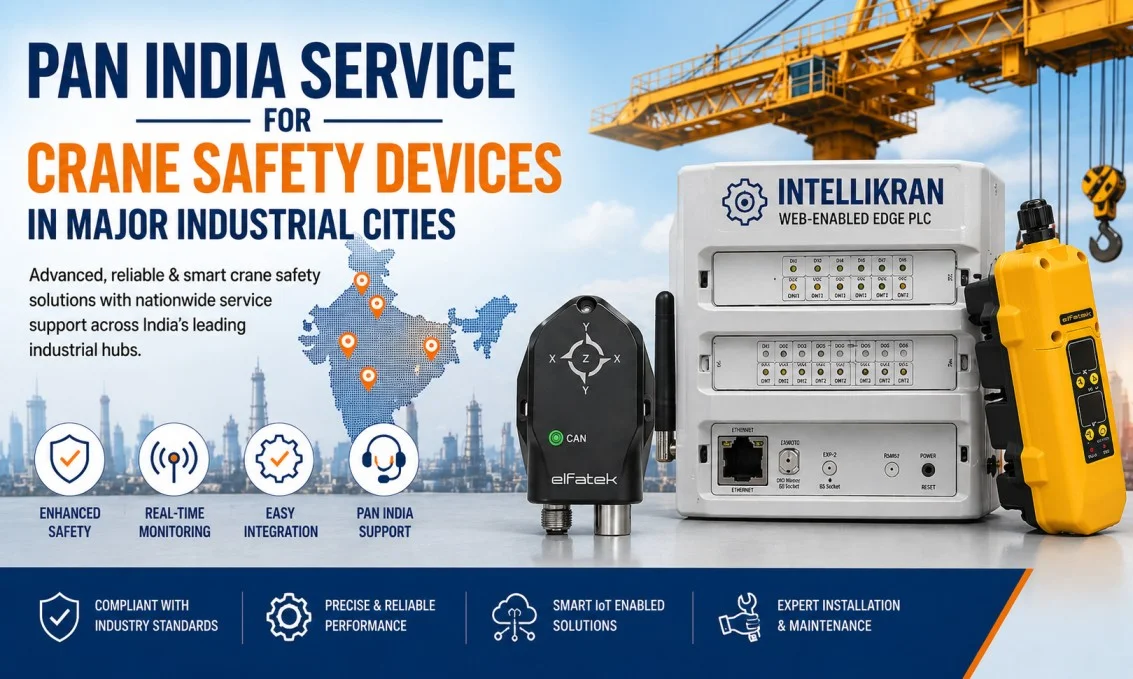
Indian factories, ports, warehouses, fabrication shops and project sites all depend on cranes, yet operating conditions vary by city. A pan India service for crane safety devices in major industrial cities helps standardise protection, records and support response.
Aggra Cranes presents itself as a crane safety and control specialist in India, offering anti-collision systems, crane safety devices, IoT solutions, overload limiters and after-sales support from its New Delhi base. That range suits companies managing several cranes and plants.
Across hubs such as Delhi NCR, Mumbai MIDC, Navi Mumbai, Pune Chakan, Ahmedabad, Vadodara, Jamshedpur, Kolkata, Ludhiana, Hyderabad, Bengaluru and Vapi, buyers increasingly seek targeted crane upgrades instead of full equipment replacement.
For procurement teams, plant heads and maintenance managers, this article explains how modern safety devices support compliance, reduce unplanned stoppages and create consistent lifting practices across industrial networks where shared runways, heavy loads and tight schedules increase risk.
Importance of crane safety
Crane safety matters because the consequences of failure are severe. The HSE identifies collapse of the crane and falling loads as principal hazards, while also warning about people struck by moving loads, contact with overhead conductors and crane collisions.
Indian law also places duties on employers. Section 29 of the Factories Act requires lifting machines, chains, ropes and lifting tackle to be well built, adequately strong, properly maintained and thoroughly examined by a competent person every twelve months.
Construction environments face equally strict expectations. The Building and Other Construction Workers Central Rules require trained operators, signalling aligned with national standards, no loading beyond safe working load, and precautions to stop people standing or passing beneath suspended loads.
In practice, safety devices do not replace supervision or planning; they reinforce them. Good sensors, alarms and interlocks give operators earlier warnings, while managers gain evidence that crane operations are being controlled through inspection, tested equipment and repeatable procedures.
Key technologies involved
IoT and cloud-based monitoring add a broader and smarter control layer to crane safety systems. Aggra Cranes integrates advanced IoT-enabled solutions using Google Firebase, enabling real-time crane data tracking, analytics, and remote diagnostics across multiple industrial locations.
Firebase services such as Realtime Database and Cloud Firestore allow continuous streaming of crane performance data, including load conditions, operational cycles, fault alerts, and usage patterns. This ensures instant visibility for plant managers and maintenance teams.
With Firebase Cloud Functions, automated triggers can be configured to respond to abnormal crane behavior, such as overload conditions or excessive side pull. These automated responses enhance safety by enabling immediate alerts and preventive actions.
Additionally, Firebase Cloud Messaging (FCM) allows instant notifications to operators and supervisors, ensuring quick response to critical events. Integration with dashboards and mobile apps ensures accessibility from anywhere across pan India industrial operations.
Industry-specific applications
Automotive and fabrication belts such as Pune Chakan and Delhi NCR need high-cycle EOT cranes for dies, assemblies, structures and machine components. In these environments, overload protection, anti-collision logic and accurate load display help keep production moving without sacrificing control.
Steel, foundry and heavy engineering sites place different demands on equipment. In Jamshedpur, Howrah-Kolkata and Vapi, overhead crane safety priorities include anti-collision systems, side-pull protection and engineered retrofits suited to harsh, high-value, high-consequence lifting operations.
Ports, docks and logistics hubs require movement under congestion, limited visibility and traffic. In Navi Mumbai and near Kolkata, demand centres on load limiters, collision avoidance and monitoring systems that help cranes work safely in dense operating envelopes.
Machine shops, warehouses and clusters such as Ludhiana, Bengaluru and Hyderabad benefit from devices that reduce operator fatigue and improve repeatability. Here, alarms, remote displays, side-pull control, anti-sway functions and smart monitoring support movement of tools, pallets and finished goods.
A genuine pan-India approach is especially useful for companies running plants in several states. One engineering partner can align device selection, commissioning records, operator familiarisation and after-sales service so crane safety expectations remain consistent from one industrial city to another.
Installation and compliance guidelines
Successful upgrades begin with a proper site survey. HSE guidance stresses planning, safe systems of work, supervision and thorough examination, while Aggra’s service language also points to application study and device selection rather than one-size-fits-all hardware supply.
Before first use, lifting machines, chains, ropes and lifting tackle must be tested and examined by a competent person, with a certificate showing safe working load kept available for inspection. That requirement should shape every installation and retrofit plan.
Model factory rules require safe working load markings, examination registers, competent operators and retesting after repair.
On construction sites, compliance depends on training, signalling, controlled lifting zones and prevention of unsafe loading. In service terms, that means calibration checks, alarm testing, wiring checks, relay function checks and documentation that inspectors, auditors and insurers can readily review.
Performance and safety benefits
The second major benefit of modern crane safety systems is predictive maintenance and operational intelligence. With Google Firebase-powered IoT systems, real-time data collection and analysis help identify performance anomalies before they result in breakdowns.
Firebase enables centralized monitoring across multiple industrial cities, allowing maintenance teams to detect patterns such as excessive load usage, irregular movements, or component fatigue. This leads to timely servicing and reduced downtime.
Real-time synchronization through Firebase ensures that all stakeholders—from operators to plant heads—have access to accurate, live data. This improves decision-making, enhances safety compliance, and ensures consistent crane performance across facilities.
Over time, these insights translate into measurable business gains, including reduced maintenance costs, improved equipment lifespan, and stronger safety compliance across all operational units.
Why choose Aggra Cranes
Aggra’s strongest advantage is portfolio depth. Its website groups anti-collision systems, load-cell based crane safety devices, side-pull protection, IoT monitoring, overload limiters and control products together, allowing buyers to source related protections from one specialised supplier.
The company also highlights application support. Aggra positions itself around application study, installation support, retrofit capability and after-sales service, which matters when devices must integrate with legacy EOT cranes rather than new standardised machines.
Just as importantly, Aggra addresses industrial belts across India, including Delhi NCR, Bengaluru, Kolkata, Vapi and other hubs. That footprint supports one partner serving warehouses, foundries, fabrication units, logistics sites and heavy engineering plants.
For aggracranes.com, the commercial message is straightforward: buyers are not only purchasing a sensor or panel; they are investing in a safer lifting system with product selection, commissioning discipline and service support aligned to real Indian operating conditions.
Conclusion and FAQs
Choosing a pan India service for crane safety devices in major industrial cities is about control. The right partner combines compliant installation, commissioning, hardware and after-sales consistency so each crane bay, workshop and logistics yard follows the same safety logic.
Aggra Cranes fits that conversation because its product mix covers overload monitoring, anti-collision, side-pull protection and IoT visibility, while its city-focused offerings remain relevant for automotive, steel, foundry, warehousing, logistics and fabrication users across India’s industrial centres.
What are the most important crane safety devices for industrial plants?
Most plants prioritise load cells or safe load indicators, overload cut-off logic, anti-collision systems, limit controls, side-pull or rope-angle protection, alarms and monitoring dashboards. The correct combination depends on crane type, duty cycle, runway layout and operational risk.
Can older EOT cranes be upgraded instead of replaced?
Yes. Kymati’s radar materials both point to retrofit-friendly solutions, which means many existing EOT and gantry cranes can receive modern safety devices without the cost, lead time and disruption of full crane replacement.
How often should cranes and lifting tackle be examined?
Llifting machines and associated tackle must be thoroughly examined by a competent person at least once every twelve months. Additional testing, retesting and routine checks are needed after installation, repair or alteration.
Why is pan India service for crane safety devices in major industrial cities valuable?
It helps multi-location businesses apply the same safety philosophy across Delhi NCR, Mumbai, Pune, Ahmedabad, Vadodara, Bengaluru, Hyderabad, Kolkata and other hubs. That consistency improves training, purchasing, documentation, spare support and audit preparedness across distributed operations.
Why should a buyer consider Aggra Cranes?
Aggra combines a broad crane safety portfolio with Indian application focus, city-specific industrial relevance and after-sales support. For companies seeking one supplier for overload protection, anti-collision, monitoring and retrofit execution, that integrated approach is commercially attractive.