A safe load indicator is only as trustworthy as the number it shows. The moment an operator glances at the display to decide whether a lift is within the crane’s rated capacity, they are placing their faith in a sensor and a piece of electronics behaving exactly as they should. Over months of heavy use, that trust has to be earned and re-earned, and the way you do that is through safe load indicator calibration. For Indian plants handling steel coils, castings, machinery and bulky fabrications every shift, calibration is what separates a load reading you can rely on from a number that quietly drifts out of step with reality.
This guide explains what safe load indicator calibration involves, why readings drift, how often calibration should happen, what the process looks like, and how it ties into safety, compliance and the smarter monitoring that modern Indian operations increasingly expect.
What a Safe Load Indicator Does, and Why Calibration Matters
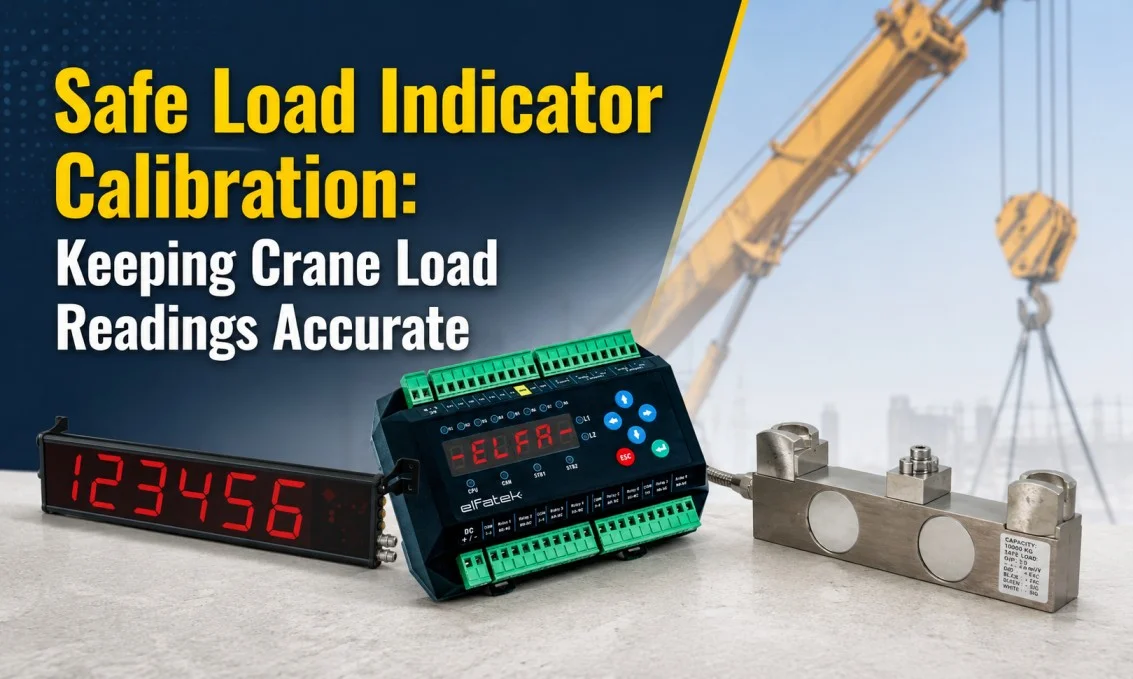
A safe load indicator, often shortened to SLI, continuously measures the weight a crane is lifting and displays it to the operator. As the load approaches the crane’s rated capacity, the device warns the operator, and at the limit it can trigger an alarm or cut off further hoisting to prevent a dangerous overload. It is one of the most important crane safety devices on the shop floor because it turns an invisible risk, an over-capacity lift, into a clear, visible figure.
Calibration is the process of making sure that displayed figure matches the actual load. It aligns the indicator’s reading against known reference weights so that, when the screen says ten tonnes, the crane really is carrying ten tonnes. Without calibration, an SLI can still light up and beep, but the numbers behind those warnings may be wrong, and a safety device that gives wrong information is more dangerous than no device at all, because it breeds false confidence.
How a Safe Load Indicator Produces a Crane Load Reading
To understand calibration, it helps to know how the crane load reading is generated in the first place. At the heart of most systems is a load cell, a sensor fitted into the load path, often on the rope anchorage, the hook block or a dynamometer link. Inside the load cell are strain gauges that flex by a tiny, precise amount as the lifting force passes through them. That flex changes an electrical signal, and the indicator converts the signal into a weight value on the display.
Because the relationship between the electrical signal and the actual weight must be exact, the indicator is programmed with calibration points: a zero reference with no load, and one or more reference points at known weights. Calibration sets and corrects these points. If the sensor signal shifts even slightly over time, the displayed weight shifts with it, which is precisely why periodic calibration is essential to preserve load indicator accuracy.
Why Safe Load Indicators Drift Out of Calibration
Calibration is not a one-time event because the conditions that affect the sensor are always changing. Several factors gradually pull an SLI away from its original accuracy.
Mechanical fatigue. Strain gauges and load cells endure millions of loading cycles. Over time, repeated stress causes microscopic changes that subtly alter the sensor’s response.
Temperature swings. Indian plant floors can be brutally hot, and temperature affects both the sensor and the electronics. Seasonal and daily variation can nudge readings off.
Electrical and environmental factors. Dust, vibration, moisture and electrical noise from nearby machinery can all influence sensitive measurement circuits over the long term.
Changes to the crane. Replacing a rope, altering the reeving, changing the hook block or relocating the crane can change the load path, and the system must be re-verified to keep the crane load reading honest.
Individually these effects are small. Together, and left unchecked over a year of hard service, they can add up to a meaningful error, which is why a disciplined calibration routine matters so much.
The Safe Load Indicator Calibration Process
While the exact steps vary by device, a sound SLI calibration follows a consistent, methodical sequence carried out by a competent technician.
- Pre-checks and inspection. The technician inspects the load cell, wiring, connectors and display for damage, corrosion or loose connections that could affect readings before calibration begins.
- Zero setting. With no load on the hook, the system is zeroed so the display correctly reads empty, accounting for the weight of the hook block and rigging as required.
- Applying reference loads. Certified test weights, or a calibrated master load cell, are lifted in known steps, commonly at around 25, 50, 75 and 100 percent of capacity, to check the reading across the full range.
- Comparing and adjusting. At each step, the displayed value is compared with the known weight. The span and linearity are adjusted so the indicator tracks the true load accurately across the range.
- Verifying repeatability. Loads are applied and removed more than once to confirm the system returns to zero and repeats the same readings consistently.
- Setting the warning and cut-off points. The overload alarm and cut-off thresholds are confirmed so they trigger at the correct percentage of rated capacity.
- A calibration record or certificate is issued, noting the reference weights used, the readings, any adjustments and the date, creating an auditable trail.
Done properly, this process restores full load indicator accuracy and gives operators and safety officers documented proof that the device can be trusted.
How Often Should a Safe Load Indicator Be Calibrated?
As a general rule, a safe load indicator should be calibrated at least once a year, and many plants align this with their statutory annual crane examination so both happen together with minimal disruption. However, the calendar is only part of the answer. Calibration should also be carried out whenever certain events occur.
After repairs or sensor replacement. Any work on the load cell, wiring or indicator means the system must be recalibrated before the crane returns to service.
After changes to the load path. New ropes, altered reeving, a different hook block or relocation of the crane all warrant re-verification.
When accuracy is in doubt. If readings look inconsistent, drift between lifts, or fail a routine check against a known weight, calibration should not wait for the annual date.
High-duty operations that run around the clock, or those handling especially critical or valuable loads, may choose more frequent verification. The principle is simple: the more the crane works and the higher the stakes, the more attention the SLI deserves.
Calibration, Compliance and Safety in India
In India, safe lifting is governed by the Factory Act and associated state rules, supported by Indian Standards such as IS 13367, the code of practice for the safe use of cranes. These frameworks expect cranes to be examined by a competent person at defined intervals and to be fitted with appropriate load-indicating and overload-protection devices. A calibrated safe load indicator, backed by a calibration certificate, is exactly the kind of documented evidence that inspectors, auditors and customers look for.
Beyond ticking a compliance box, calibration protects what matters most. An accurate SLI helps prevent overloading that can lead to dropped loads, rope and structural failure, equipment damage and injury. It protects expensive cranes from being stressed beyond their design limits, and it protects production by avoiding the unplanned downtime that follows an accident. In short, calibration turns a safety device into a genuine safeguard rather than a decorative display.
Signs Your Safe Load Indicator Needs Recalibration
Operators and maintenance teams are often the first to notice when something is off. A few practical warning signs suggest it is time to check or recalibrate the SLI.
Inconsistent readings. The same known load shows different weights on different lifts, or the display fluctuates noticeably when the load is steady.
Failure to return to zero. After the load is removed, the indicator does not settle back to zero.
Readings that do not match. A test against a weight of known mass shows a clear gap between the displayed and actual figures.
Alarms triggering at the wrong point. The overload warning fires too early or too late relative to the true capacity.
Any of these is a prompt to verify the system against a known reference and, if needed, schedule a full calibration before the next critical lift.
From Calibration to Continuous Confidence
Calibration confirms that a crane load reading is accurate at a point in time. The next step many forward-looking Indian plants are taking is to keep that confidence continuous through smart monitoring. When load data is captured and logged digitally, every lift leaves a record, trends become visible, and unusual readings can flag a developing problem long before the next scheduled calibration.
This is where Aggra Cranes brings an intelligence layer to lifting. Through the IntelliKran system, load and operational data can be monitored and logged, giving managers real-time visibility and an auditable history of how cranes are used. Paired with regularly calibrated safe load indicators, this combination moves a plant from periodic checks toward continuous assurance, where accurate readings, overload protection and data-driven oversight work together to keep every lift safe.
Why Aggra Cranes
Aggra Cranes & Engineering LLP is a specialist in crane safety and control solutions for Indian industry, focused on the safety and intelligence layer that keeps cranes operating reliably. We supply, install and support safe load indicators, load cells, overload limiters, anti-collision systems, control devices and intelligent IoT monitoring, backed by genuine after-sales service across the country.
When it comes to safe load indicators, our team helps you select the right load-sensing solution, commission it correctly, and keep it accurate through proper calibration and maintenance. We understand the demands of Indian plant floors, from steel and foundry environments to manufacturing, ports and warehousing, and we engineer for those conditions rather than offering a one-size-fits-all box.
With the IntelliKran system, Aggra Cranes also helps you go beyond the display, turning load data into logged, auditable insight that supports both safety and compliance. Based in Okhla, New Delhi, and serving industries nationwide, we partner with you across specification, installation, calibration and the full service life of your safety devices, so every crane reading you rely on is one you can trust.
Frequently Asked Questions
1. What is safe load indicator calibration?
Safe load indicator calibration is the process of checking and adjusting a crane’s load indicator so the displayed weight matches the actual load. A technician zeroes the system, applies known reference weights across the capacity range, compares the readings, adjusts the span and linearity, confirms the overload warning and cut-off points, and issues a calibration record. The result is an accurate, trustworthy crane load reading.
2. How often should a safe load indicator be calibrated?
As a baseline, calibrate at least once a year, ideally alongside the crane’s statutory annual examination. Calibration should also be done after any repair or sensor replacement, after changes to ropes, reeving or the hook block, after relocating the crane, or any time readings appear inconsistent. High-duty or critical-lift operations may verify more frequently to maintain confidence in load indicator accuracy.
3. What happens if a safe load indicator is not calibrated?
An uncalibrated SLI can drift, showing weights that no longer match the real load. This is dangerous because operators may unknowingly overload the crane, risking dropped loads, rope or structural failure, equipment damage and injury. It can also create compliance problems during inspections and audits. Regular calibration keeps the device a genuine safeguard rather than a misleading display.
4. Can a safe load indicator be calibrated on-site?
Yes. In most cases calibration is carried out on-site by a competent technician using certified test weights or a calibrated master load cell, so the crane stays in its working environment. The process is methodical but efficient, and scheduling it alongside routine inspection or maintenance keeps disruption to a minimum. Aggra Cranes provides on-site calibration and support across India.
5. Is safe load indicator calibration required for compliance in India?
Indian safety frameworks, including the Factory Act and standards such as IS 13367, expect cranes to be examined by a competent person and fitted with appropriate load-indicating and overload-protection devices. A calibrated safe load indicator with a calibration certificate provides the documented evidence that supports compliance and stands up to inspection and customer audits.
Keep Every Lift Within Safe Limits
Safe load indicator calibration is a small, regular discipline with an outsized impact on safety, compliance and uptime. By keeping crane load readings accurate, calibration ensures the warnings and cut-offs operators depend on are based on the truth, not on a drifting figure. Combine well-calibrated safe load indicators with the logged, real-time oversight of the IntelliKran system, and you build a lifting operation that is safer, smarter and audit-ready. To schedule safe load indicator calibration or upgrade your crane safety devices, talk to the team at Aggra Cranes & Engineering LLP.