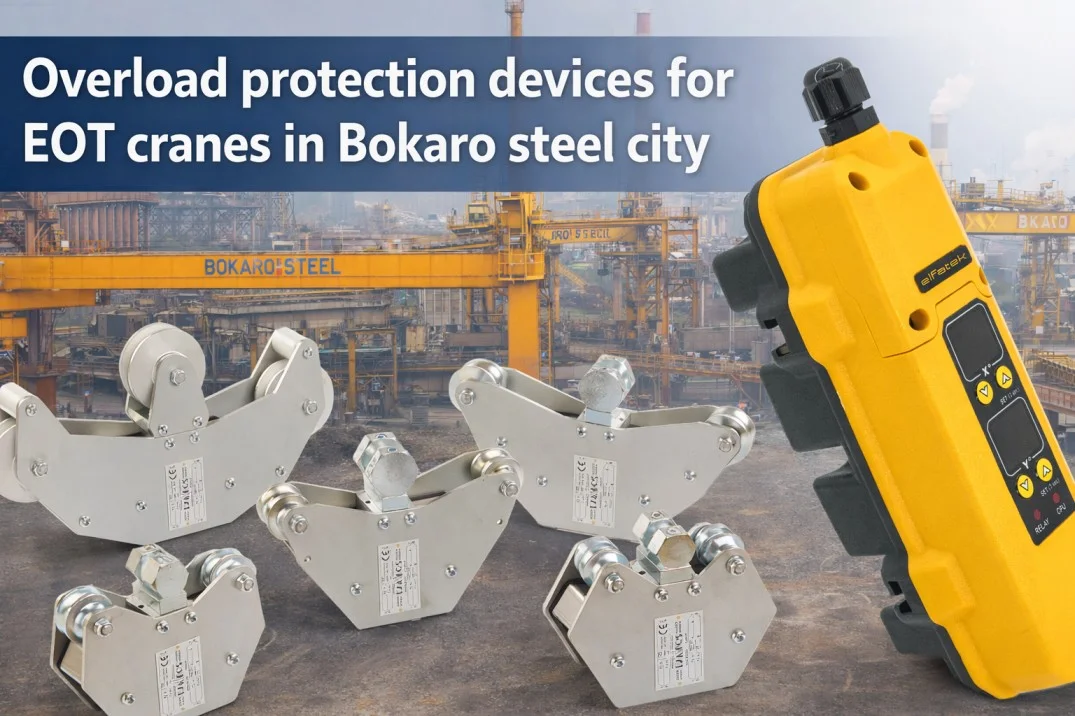
Overload protection devices for EOT cranes in Bokaro steel city are critical safety systems that prevent cranes from lifting beyond their rated capacity, protecting people, equipment, and production uptime. This article explains how these devices work, why they matter for steel plants in Bokaro, and how Aggra Cranes can help you modernize your lifting safety.
Introduction to overload protection devices for EOT cranes in Bokaro steel city
Bokaro Steel City hosts integrated steel plants, fabrication shops, warehouses, and material‑handling yards where EOT cranes run almost round the clock. In such heavy‑duty environments, overload protection devices continuously monitor lifted loads and stop hoisting when the safe working load is exceeded.
These systems combine sensors, electronics, and alarms to ensure that EOT cranes in Bokaro remain within the limits defined by design codes and safety standards. For plant owners, they reduce the risk of catastrophic failures, unplanned shutdowns, and costly breakdowns in critical production bays.
Importance of crane safety
EOT cranes handle molten metal ladles, billets, coils, and heavy machinery where even a small mistake can lead to serious accidents or long outages. Overloading is one of the most common root causes of structural damage, wire rope failure, and brake overheating in industrial cranes. By enforcing safe load limits, overload protection keeps stresses within what IS 3177, IS 807, and related Indian crane codes consider acceptable for long‑term reliability.
Compliance with these safety norms is not only good engineering practice, but also supports audits, insurance requirements, and statutory inspections for Bokaro‑based plants. In a competitive steel market, safe and reliable material handling directly supports on‑time deliveries and consistent product quality.
Key technologies involved
Modern overload protection devices for EOT cranes use a mix of mechanical, electronic, and digital technologies to achieve accurate and repeatable load control. The most common approach uses load cells or strain‑gauge sensors on rope anchors, equalizer beams, or the dead end of the hoist to measure actual hoisting forces in real time. These signals go to an electronic controller or Safe Load Indicator (SLI) that compares the measured load with preset thresholds linked to the crane’s rated capacity.
When values approach the warning range, the system triggers visual or audible alarms, and if the limit is crossed, it cuts hoisting motion while allowing safe lowering or emergency procedures. Advanced systems add features such as multiple set points, slack‑rope detection, data logging, and integration with PLCs or IoT platforms for remote monitoring and maintenance planning.
Industry-specific applications in Bokaro
In Bokaro’s steel and allied industries, EOT cranes operate in high‑temperature bays, dusty coke‑oven areas, coil yards, and fabrication shops with varying duty classes. Ladle cranes need overload protection calibrated not only to rated load but also to dynamic factors like thermal expansion, impact loading, and frequent starts, making reliable sensors and rugged electronics essential.
Coil‑handling and slab‑handling cranes benefit from load monitoring to prevent overfilling of storage rows and to minimize structural fatigue in long‑span girders. In maintenance workshops and spares stores, compact hoists with overload devices safeguard technicians during equipment overhauls and rigging activities. Power plants, cement units, and engineering companies around Bokaro also adopt similar systems to standardize crane safety across their Jharkhand facilities.
Installation and compliance guidelines
For existing EOT cranes in Bokaro, overload protection can be retrofitted after a detailed site survey that checks crane capacity, duty class, structural condition, and electrical layout. The right selection of load cell configuration—pin type, compression, tension, or shackle‑based—depends on hoist design, rope arrangement, and available mounting points.
Once sensors and electronics are installed, the system must be calibrated using test loads or water bags so that alarm and trip points match the crane’s safe working load and relevant Indian standards. Codes such as IS 3177, IS 807, IS 4137, and IS 4691 provide guidance on load testing, proof tests, and documentation required before a crane is cleared for regular operation. Regular inspection, re‑calibration, and functional testing during shutdowns ensure that overload limiters continue to perform reliably despite harsh steel‑plant conditions.
Performance and safety benefits
A properly engineered overload protection system significantly extends the service life of EOT crane structures, wheels, wire ropes, and mechanical components by reducing hidden over‑stress cycles. Automatic cut‑off on overload conditions prevents incidents such as hook failure, girder cracking, or end‑carriage damage that otherwise lead to expensive downtime and repairs. Early‑warning alarms and real‑time load displays help operators plan lifts more confidently, reduce human error, and maintain consistent productivity.
Data logging features allow maintenance and safety teams to review historic overload events, optimize preventive maintenance schedules, and demonstrate compliance during corporate or external audits. For plant management in Bokaro, these benefits translate into lower lifecycle costs, improved safety culture, and stronger trust from clients and regulatory bodies.
Why choose Aggra Cranes for Bokaro steel city
Aggra Cranes & Engineering LLP specializes in crane safety and control solutions, including overload limiters, load cells, and display systems tailored to Indian industrial conditions. The company offers end‑to‑end services—from survey and engineering design to supply, installation, calibration, and operator training—for EOT and gantry cranes across steel, power, and manufacturing sectors. Its overload protection offerings include Italian‑origin limiters, robust industrial load cells, and smart monitoring units that integrate easily with existing crane controls and anti‑collision systems.
With experience serving dense industrial belts like Navi Mumbai and North Indian regions, Aggra Cranes is well placed to support Bokaro plants that require minimal downtime during retrofits and upgrades. Customers also benefit from after‑sales support, spares availability, and advisory on IS‑code compliance and future IoT‑based crane digitalization.
How Aggra Cranes supports Bokaro projects
For clients in Bokaro Steel City, Aggra Cranes can coordinate surveys and project execution to align with planned shutdowns or maintenance windows, reducing disruption to core processes. Engineers assess crane condition, recommend the right overload protection architecture, and configure alarm logic to match specific bay layouts and operational practices. When combined with anti‑collision systems and remote monitoring, these solutions create a multi‑layered safety envelope around every critical crane.
Conclusion
Overload protection devices for EOT cranes in Bokaro steel city are no longer optional add‑ons; they are essential safety investments that protect people, equipment, and production schedules. By combining accurate load sensing, intelligent controls, and routine calibration, steel plants and allied industries can keep cranes compliant with Indian safety standards while boosting reliability.
Partnering with a specialized safety solutions provider like Aggra Cranes ensures that every retrofit or new installation is engineered for local conditions, regulatory requirements, and future scalability. If your EOT cranes in Bokaro still operate without modern overload protection, now is the right time to upgrade and secure your lifting operations for the long term.
FAQ
1. What is an overload protection device for EOT cranes?
An overload protection device is a safety system that measures the actual load on an EOT crane and stops hoisting when it exceeds the rated capacity. It typically uses load cells, sensors, and electronic controllers to provide alarms and automatic cut‑off functions during unsafe lifting conditions.
2. Why is overload protection important in Bokaro steel plants?
Bokaro steel plants handle very heavy and high‑value loads, so even a single overload incident can damage cranes, disrupt production, or cause serious accidents. Overload protection keeps lifting operations within safe limits, helping plants meet IS standards and corporate safety policies while reducing costly downtime.
3. Can overload protection be retrofitted to existing EOT cranes?
Yes, most existing EOT cranes can be upgraded with suitable load cells, limiters, and displays after a technical site survey. The key steps include choosing compatible hardware, installing sensors at correct locations, and calibrating the system through load testing as per Indian codes.
4. Which standards govern overload protection for cranes in India?
Important standards include IS 3177 for crane design, IS 807 for safety rules, IS 4137 for testing, and IS 4691 for structural design of crane components. Many government and EPC projects also require compliance with BIS guidelines and DGMS recommendations that emphasize overload limiters and SLIs on cranes.
5. How does Aggra Cranes help with overload protection projects?
Aggra Cranes provides overload limiters, load cells, and integrated crane safety systems along with engineering, installation, and calibration services. Their team supports plants from initial consultation through commissioning and after‑sales service, ensuring that EOT cranes operate safely and comply with relevant standards.